Author: Lijun Sun
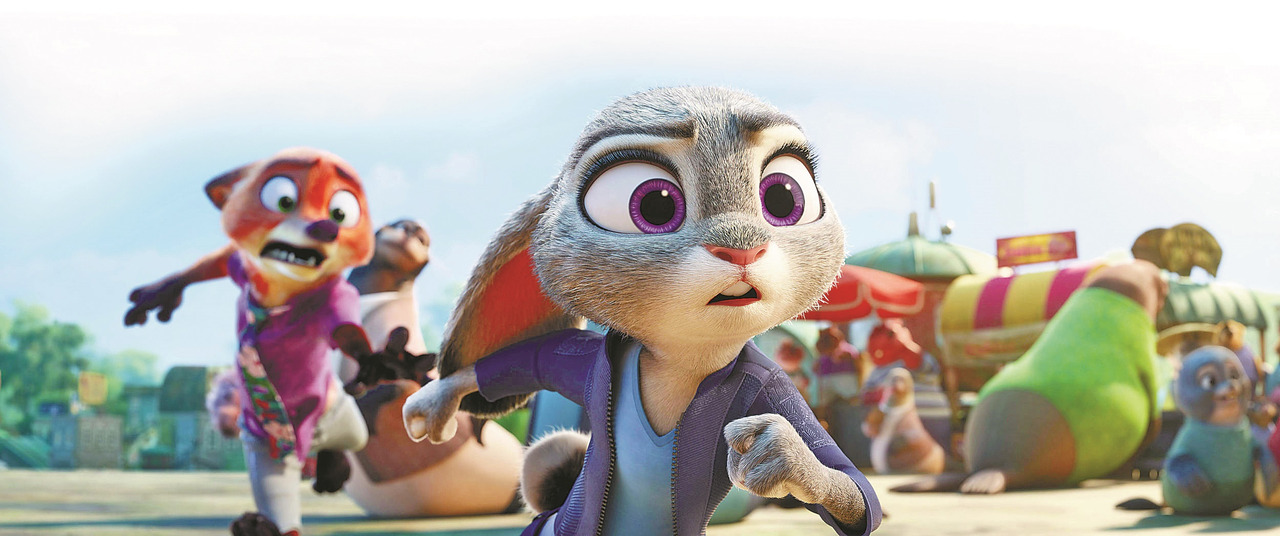
A still from Zootopia 2. (Photo provided by Visual China)
Nearly a decade after the phenomenal 2016 animated film Zootopia, its sequel has arrived as expected. Avoiding the “sequel curse,” it has become a family-friendly hit thanks to its precise target audience, fast pace, stunning visuals and sound, and solid production, sparking a viewing frenzy worldwide. From its global release on November 26th to December 3rd, the film has grossed over $630 million worldwide. It captivated children and resonated with adults, demonstrating the creative logic of appealing to all tastes in an accessible way, and offering a core answer to animation creation in the era of rising AI technology.
Layered narrative ingenuity: family viewing, each member can find something they like.
Good animation can always transcend age boundaries. The popularity of Zootopia 2 began with its storytelling method of “one character, one face”.
For children, the core of the film is fun adventure: Judy Hopps and Nick Wilde team up to track down Gary the Snake, venturing from the bustling city into a mysterious, remote area, with interconnected plots of infiltration, escape, and mystery-solving. Gary’s playful appearance and Judy and Nick’s witty responses are full of childlike innocence and fun, while the simple philosophical messages they convey flow naturally through the story, without any forced preaching. Adults, on the other hand, can see reflections of real-world issues behind the adventure: Gary’s incompatibility as an “outsider,” the gap between the remote area and the city, the subtle cultural differences that emerge, and the plight of minority groups. This design, which is “adventure on the surface, thought-provoking on deeper levels,” ensures that parents won’t be bored while watching the film and can even take the opportunity to discuss “inclusivity” and “understanding” with their children, achieving a “family viewing experience where everyone gets what they want.”
A heartwarming spiritual core: touching audiences from diverse backgrounds
The core of the film’s global popularity lies in its spirit of “embracing differences, rejecting prejudice, and upholding goodwill”—a universal sentiment that transcends national borders and cultures. For example, for Chinese audiences, Gary’s experience of integrating into Zootopia is a reflection of young people struggling in big cities who “want to be accepted but repeatedly encounter setbacks”; Judy and Nick’s choice to put aside their prejudices also aligns with the concept of “harmony in diversity.”
When watching the film as a family, parents can guide their children to understand the concept of “not judging a book by its cover,” while young people can feel the “courage to uphold kindness.” In a world where cultural differences are increasingly prominent, this core message can provide warmth and strength to audiences from diverse backgrounds.
Fast-paced and exhilarating: no dragging, just pure bliss.
The most obvious highlight of Zootopia 2 is its fast-paced and engaging rhythm, which firmly grabs the audience’s attention. The plot unfolds without any unnecessary build-up, opening with the chaos caused by Gary the snake. Judy and Nick take on a mission, infiltrate a remote area, discover the truth, and find themselves in a dangerous situation. Every twist and turn is crisp and clean, without lengthy flashbacks or subplots. The core storyline progresses steadily, which is especially suitable for the viewing habits of children whose attention spans are easily distracted.
The visual pacing is equally exhilarating: the fast-paced cuts during the cave chase and the fluid trajectory of Gary the snake deliver a powerful visual impact; coupled with a dense and witty dialogue, Nick’s banter always adds a touch of lightness to the tense chase. The combination of “fast dialogue, fast shots, and fast plot” makes the viewing experience like a lighthearted roller coaster, thrilling and fun, with no dull moments.
Art and performance resonate: Exaggerated design makes the characters more vivid
The film’s visuals are striking, stemming from the interplay between the exaggerated creativity of the art direction and the vivid and lively performances of the characters. The art direction continues the fantasy style of the previous film, adding new elements that fit the theme: the damp caves and rough rocks of the remote areas contrast sharply with the clean and prosperous main city, creating a visually impactful effect while also suggesting the difference in circumstances between the “periphery and the center.”
The character designs are precise and engaging: Gary the Snake’s scales are clearly defined, and his gliding movements combine biological characteristics with cartoonish exaggeration; Judy’s rabbit appearance is adorable, and her running movements are full of energy; Nick’s fox silhouette is cunning, and his mischievous eyebrow raise and grin are unforgettable. These designs and performances are perfectly integrated: Gary’s curled-up body and pitiful eyes when misunderstood make him appear even more pitiful, while Judy’s determined gaze and petite size when investigating clues create a striking contrast, making her character traits stand out even more.
The setting provides the stage for the performance, and the performance gives the setting warmth, together creating a three-dimensional and tangible animal world.
A Victory for Detail-Oriented Enthusiasts: Disney-Style Craftsmanship
The film’s intriguing nature is inseparable from Disney’s pursuit and control over production details. The character designs are full of ingenuity: Judy’s ears stand up, droop, or twitch depending on her emotions; Nick’s tail sways when relaxed and tenses when alert; Gary’s scales change luster with the light; and these subtle details on his body are consistent with his adventures.
The film is filled with meticulous details: the convenience stores on the main city streets have whimsical animal-themed signs; the haystacks and worn-out fabrics in the remote caves reveal the living conditions of marginalized groups; the slight wear and tear on Judy’s badge and the subtle textures of Nick’s scarf enhance the realism of the characters and scenes. These seemingly insignificant details make the film worth watching repeatedly, and new highlights can always be discovered on second or third viewings.
The sound design is a plus: the dialogue is very close to the character’s face, and the background music is very expressive.
Sound design is key to a film’s impact; it must be both “pleasant to listen to” and precisely serve the character development.
The dialogue perfectly matches the characters: Judy’s voice acting is bright and energetic, fitting her positive and earnest personality; Nick’s voice acting carries a lazy slyness, showing his resourcefulness in crucial moments; and Gary’s husky voice, slowing down when aggrieved and quickening when tense, perfectly captures his traits. The dialogue is also designed for general understanding, without complex vocabulary, making it easy for children to follow along and natural for adults as well.
The soundtrack is truly an “invisible protagonist”: the fast-paced electronic music during chase scenes gets your heart racing; when characters go from “enemies” to “allies,” the music is soft and warm, conveying trust and understanding; when Gary the Snake laments his predicament, the gentle melody creates a melancholic atmosphere, highlighting his inner loneliness. The music doesn’t overshadow the story but is perfectly placed, enhancing the emotions of the plot and the characteristics of the characters, making it easier for the audience to empathize.
Similar characteristics of excellent films: A sense of resonance is the key to high box office success.
The success of Zootopia 2 is not an isolated case. In recent years, global phenomenal animated films have all used “resonance” as the key to their high box office success.
For example, this year’s Chinese animated film The Little Monster of Langlang Mountain tells an ordinary story from the perspective of “working class,” resonating with the feelings of office workers and becoming a critical and commercial hit; 2015’s Monkey King: Hero Is Back blends traditional culture with modern narrative, showcasing Sun Wukong’s growth path with both heroic spirit and the value of “protection,” demonstrating cultural confidence. 2024’s Japanese anime Looking Back focuses on and interprets the themes of “youth, dreams, and friendship” through the shared love of comics between two very different girls… Like Zootopia 2, these works use popular stories to convey emotions and beliefs that transcend culture, allowing different audiences to find resonance, which is precisely the key to their phenomenal success.
Technology Serving Creativity: Imagination and Aesthetics in the AI Era
Zootopia 2, despite using traditional 3D technology, delivered an impressive result, proving the core logic of animation creation: in the AI era, imagination and aesthetic sense remain fundamental, and only by combining the two with technology can we achieve a balance between highbrow and lowbrow appeal.
The film’s 3D production maintains Disney’s high standards: the characters’ hair and scales are detailed and the scene details are realistic, but the technology is never used for “showing off” but always serves the story and aesthetics, allowing the audience to experience exquisite details without neglecting the plot.
In an era where AI is increasingly permeating animation production, the success of this work is all the more precious. AI can assist in technical tasks such as modeling and rendering, but it cannot replace human imagination and aesthetic sense—the fantastical Zootopia setting and the interesting character interactions are manifestations of imagination; while the selection of scenes, control of pacing, and expression of themes test aesthetic sense. This also reminds us that the core of animation creation is not “what technology to use,” but “what to express with technology.” Only when imagination and aesthetic sense are combined with solid execution and appropriate technology can a masterpiece that appeals to all ages be created.
In conclusion, Zootopia 2 accurately captures the needs of the masses: it resonates with diverse audiences through layered narratives and a core message, retains attention with its fast pace and exquisite details, enhances the experience with high-quality audiovisuals and solid production, and successfully demonstrates the importance of “resonance” and “craftsmanship.” It is not only an entertaining blockbuster worth watching with the whole family, but it also shows us that good animation can provide a relaxing experience while conveying heartwarming values—this is its most touching aspect.
(The author is the Dean of the China Animation Research Institute at Beijing Film Academy)
Editor: Jin Yi
 [Advisor Feature] Sun Lijun | Former Vice President of Beijing Film Academy and Dean of China Animation Research Institute: A Pioneer in Cross-Disciplinary Visual Arts