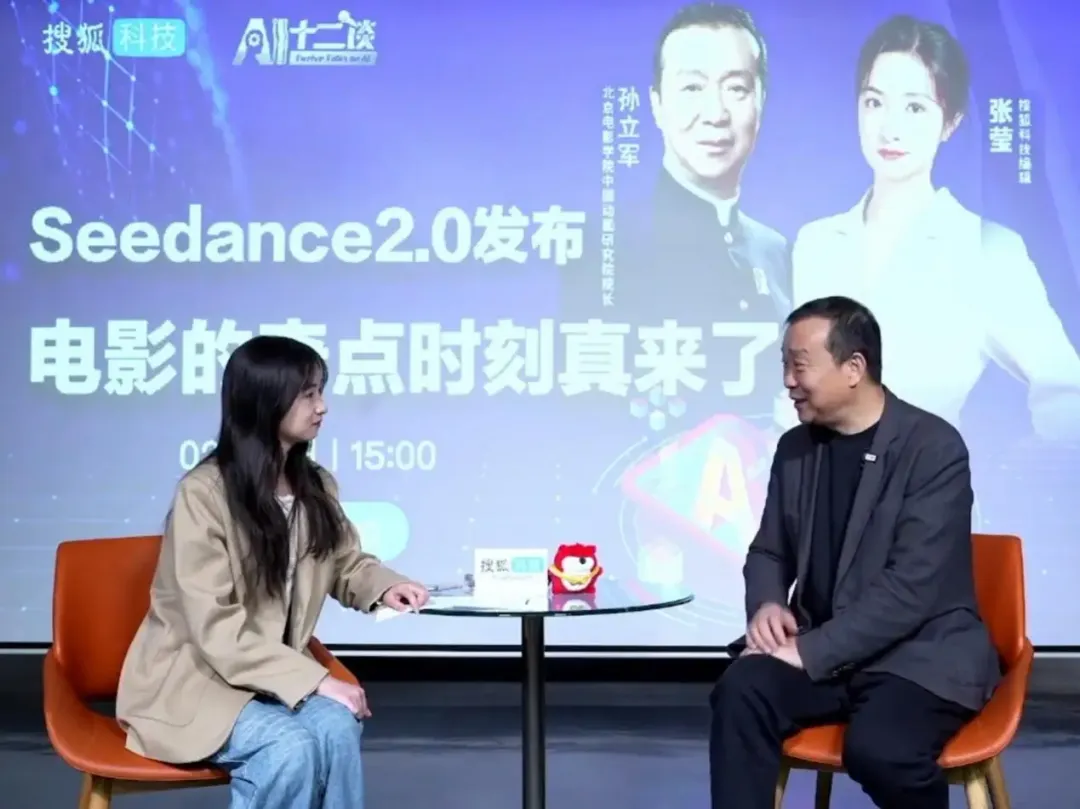
Date: December 10, 2025
Location: Beijing Film Academy Conference Room
Interviewee: Sun Lijun (Professor, Beijing Film Academy)
Interviewer: Jin Ziyi (PhD candidate, Class of 2024, School of Animation, Beijing Film Academy)
Editor in charge: Tan Qiuwen
Copyright © Contemporary Cinema Magazine
Source: Contemporary Animation, Issue 1, 2026
Jin Ziyi (hereinafter referred to as Jin): Professor Sun, hello! AI generation technology is redefining the boundaries of “creation.” From the perspective of animation ontology, will the intervention of AI shake the core definition of “animation art”? How should we understand the philosophical implications of the paradigm shift from “artist-led creation” to “human-machine collaborative creation”?
Sun Lijun (hereinafter referred to as Sun): The rise of AI technology in the animation and film industry has taken nearly three years. In 2023, rudimentary applications such as text-to-image generation and motion image compositing sparked a heated debate about whether technology would replace creators. In 2024, AI-animated short films were shortlisted for international film festivals, and commercial projects introduced AI-assisted production, gradually shifting the debate towards “standardizing the boundaries of AI applications.” By the end of 2025, the industry had reached a general consensus—AI is not a substitute for artistic creation, but rather a core enabler. Through participating in numerous industry forums and academic seminars at home and abroad, I have deeply perceived the core logic of this shift in attitude: technological innovation has never changed the essence of artistic creation, but it is continuously reshaping the methods, language, and boundaries of creation.
From an ontological perspective, the intervention of AI will not shake the core definition of animation art. The core of animation art has always been visual expression “guided by creativity, standardized by aesthetics, and centered on emotion,” with technology merely serving as a tool to achieve this core. Looking back at the more than 100-year history of film and animation, technological innovation has always been the core driving force for breakthroughs in artistic expression. Each technological leap has been accompanied by a paradigm shift from traditional to new forms, but the essence of artistic creation has never changed. The philosophical connotation of this paradigm shift from “artist-led creation” to “human-machine collaborative creation” lies in the “unity of instrumental rationality and value rationality.” In traditional creation, the artist is both the initiator of the idea and the leader of its execution. Collaborative creation in the AI era delegates repetitive and procedural tasks to AI, while the artist focuses on creative conception, aesthetic judgment, and emotional infusion, achieving a division of labor model of “human-led creativity and AI-empowered execution.” This shift is not a denial of the artist’s subjective position, but rather a liberation of productivity through technological empowerment, allowing artists to focus more on the core values of artistic creation—the pursuit of humanistic care, the adherence to creative expression, and the exploration of aesthetic value. The underlying logic of this paradigm shift is essentially an upgrade of technological tools from “assisting execution” to “collaborating creativity.” AI can generate massive amounts of creative solutions but lacks humanistic concern, requiring creators to imbue them with soul through creativity; AI can quickly generate visuals but requires creators to control style with aesthetic sense; AI can improve efficiency but requires creators to coordinate implementation with execution capabilities. New animation languages are the result of collaboration between creators and AI—creators are guided by creativity, guided by aesthetic sense, and supported by execution capabilities, while AI empowers with technology, jointly constructing an expressive system adapted to the new era.
Jin: AI technology has permeated the pre-production, production, and post-production stages of animation. In terms of script conception, concept design, storyboarding, original animation, lighting and rendering, post-production compositing, and voice-over and music composition, what revolutionary efficiency improvements has it brought? And what creative limitations cannot be ignored?
Sun: Looking back at the more than 100-year history of film and animation, technological innovation has always been the core driving force for breakthroughs in artistic expression. Every technological leap has been accompanied by a transformation from traditional to new forms, and the language of animation has also iterated and upgraded accordingly. Since its inception, film has relied on technological inventions, from the single-shot recording of silent films to the formation of montage editing language, and then to the emergence of sound and color films, gradually building a mature audiovisual language system and achieving an artistic leap from “recording reality” to “reconstructing reality.” Currently, the intervention of AI technology is driving the animation field from traditional images and digital images to the era of intelligent images, giving rise to a new animation expression system that transcends existing audiovisual languages.
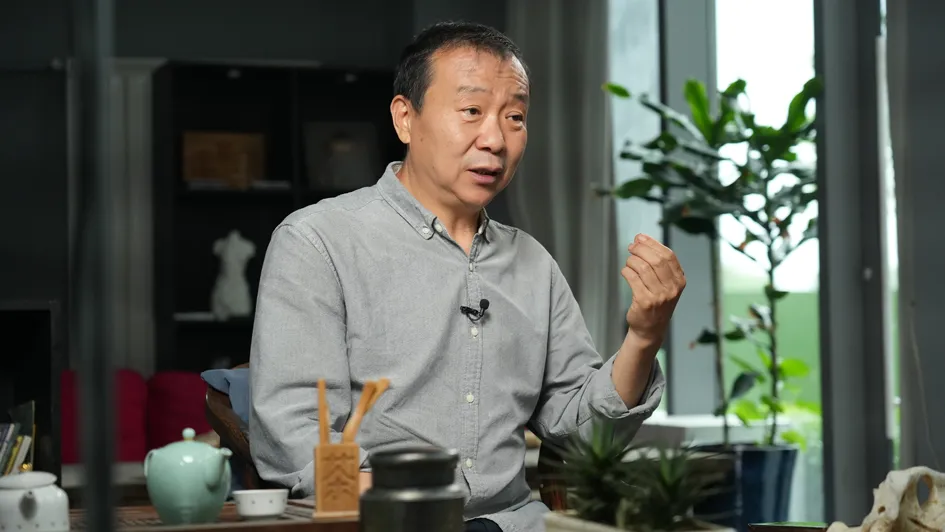
Sun Lijun
In the scriptwriting stage, AI’s improvements are reflected in “creative brainstorming and material integration.” By inputting keywords such as core themes and style positioning, AI can quickly generate multiple script frameworks, plot developments, and even dialogue fragments, helping creators break free from fixed mindsets. Simultaneously, AI can integrate the narrative logic of a vast amount of similar works, providing creators with references. Its limitation lies in the fact that AI lacks the unique life experiences and emotional resonance of humans; the scripts it generates often lack deep ideological content and emotional tension, making it difficult to construct a narrative core that touches the heart.
In the concept design phase, AI enables rapid iteration and stylistic diversity. Creators can input specified style prompts and other instructions, and AI can generate dozens of solutions in a short time, covering multiple dimensions such as shape, color, and material. Simultaneously, AI can quickly simulate classic art styles, providing a convenient path for style exploration. The limitation lies in the fact that AI-generated designs are often simply reorganizations of training data, lacking unique personalized expression, and the handling of details is often rough; for example, the proportions of traditional patterns are out of balance, and the emotional expression of character designs is lacking, requiring creators to perform secondary optimization.
In the storyboard creation stage, AI’s advantages lie in its ability to streamline shot logic and generate rapid drafts. By inputting script excerpts and shot requirements, AI can quickly generate initial storyboard drafts that conform to narrative logic, clearly defining the basic framework such as shot arrangement and framing. Its limitations lie in its inability to accurately grasp narrative rhythm and emotional tension. For example, it cannot convey emotional changes through subtle adjustments to shot length, nor can it achieve innovative, personalized cinematic language. The artistic impact of the storyboard still requires the creator’s guidance.
In the original animation process, the core value of AI lies in visualizing motion patterns and reducing workload. In the traditional model, it’s already quite difficult for students to complete one or two hundred motion pattern drawings per semester. AI technology, however, can easily generate intermediate frames between keyframes, quickly presenting complete dynamic effects, allowing creators to focus their energy on creative aspects such as movement rhythm and character performance. The limitation is that AI-generated animation often lacks “life force” and struggles to simulate the subtle emotional expressions in human performances. For example, the relaxation of a character’s limbs and subtle changes in facial expressions remain weaknesses for AI; these require creation based on human life experience.
In lighting rendering and post-production compositing, AI brings the most significant efficiency improvements. AI can automatically match the lighting logic of a scene, quickly generate rendering effects that match the style, and intelligently repair image flaws and optimize color balance. In post-production compositing, AI can quickly integrate and adapt multiple materials, significantly shortening the production cycle. The limitation is that AI’s lighting design mostly follows standardized algorithms and lacks the artist’s subjective shaping of the atmosphere of the scene. For example, conveying a character’s inner conflict through asymmetrical lighting still requires human control.
In the dubbing and music selection process, AI can quickly generate sound effects and background music that match the style of the visuals, and even complete basic dubbing through speech synthesis technology. The limitation is that AI dubbing lacks the emotional layers of human voices, making it difficult to convey the emotional changes of the characters; the background music is also mostly a patchwork of stylistic elements, lacking a deep fit with the narrative rhythm, and failing to enhance the emotional expression of the work through music.
Jin: “Authorship” is the core of the tradition of the “Chinese Animation School.” When AI can easily imitate the style of any master, how will the “authorship” of the animation director be manifested? Will this give rise to a “co-author” identity through human-machine integration?
Sun: AI technology has not only revolutionized creative tools and animation language, but also given rise to a new aesthetic form in animation. This new aesthetic is not a negation of traditional aesthetics, but rather an expansion and upgrade empowered by technology. Its core characteristics are “the fusion of technological rationality and artistic sensibility” and “the unity of standardized production and personalized expression.” Aesthetic sense and creativity have become the core benchmarks for distinguishing AI-generated content from works of art. The core of “authorship” is not “the uniqueness of style,” but “the creative subject’s dominance over the ideological connotation, aesthetic orientation, and emotional expression of the work.” The “authorship” of the “Chinese Animation School” is reflected not only in its unique artistic styles such as ink painting and paper cutting, but also in the traditional cultural core and humanistic spirit contained in the works—for example, the ink painting atmosphere and philosophical reflections on life in “Little Tadpoles Looking for Their Mother,” and the aesthetic form and national spirit in “Havoc in Heaven.” When AI can imitate the style of masters, the “authorship” of animation directors will shift from “the creator of style” to “the leader of creativity, the establisher of aesthetics, and the injector of spirit,” specifically reflected in three dimensions: first, the dominance over ideological connotation. AI can imitate styles, but it cannot generate its own thoughts. Directors, by setting the theme, narrative logic, and value orientation of their work, imbue AI-generated content with a soul. For example, even within the same ink-wash style animation, a director can design instructions and select content to convey the traditional cultural concept of “harmony between man and nature.” This ideological guidance is the core manifestation of “authorship.” Secondly, there is the control over aesthetic standards. AI-generated styles are replicas of training data, while a director’s “authorship” is reflected in their personalized interpretation and reconstruction of aesthetics. For example, faced with multiple ink-wash style scenes generated by AI, a director can choose the option that matches the atmosphere of the work based on their own aesthetic judgment and optimize details—adjusting the degree of ink wash, enhancing the negative space in the image, etc.—so that the style serves the overall aesthetic expression of the work, rather than simply imitating the style. Thirdly, there is the control over emotional expression. The emotional resonance of an artwork stems from the creator’s life experience, which AI cannot replicate. By integrating their own emotional experiences and cultural understanding into the creation, directors guide AI to generate content that aligns with emotional expression, allowing the work to convey a unique emotional warmth. This emotional guidance is the core value of “authorship.”
This human-machine collaborative creative model will indeed give rise to a new identity of “co-authors.” However, these “co-authors” are not equal creative subjects, but rather a division of labor of “human-led, AI-assisted”—humans are the “creative authors,” responsible for infusing ideas, aesthetics, and emotions; AI is the “executive author,” responsible for the technical aspects of content generation. The core of this new identity is that human creators optimize and upgrade artistic expression through the guidance and control of AI, rather than AI replacing humans as the creative subject.
Jin: You have been committed to exploring the nationalization of Chinese animation. AI has great potential in learning and generating traditional cultural elements such as ink painting, paper cutting, and shadow puppetry. Do you think AI is a “magic brush” for efficiently inheriting and innovating national styles, or a “double-edged sword” that may lead to stylistic convergence and the erosion of cultural depth due to the homogenization of training data?
Sun: In the AI big data model, cultivating and strengthening Chinese aesthetics is an important issue for the national expression of Chinese animation. In the early stages of AI big data model application in 2023, the lack of Chinese aesthetics was a prominent problem. AI-generated content mostly presented Western or Japanese styles. With the emergence of Chinese AI models, the proportion of Chinese aesthetics has gradually increased, but the problems of “too much formalistic imitation and shallow exploration of connotation” still exist.
AI is essentially a double-edged sword for the national expression of Chinese animation. Its value depends on how we master the technology. If used well, it can become a magic brush for inheriting and innovating national styles; if used improperly, it may lead to stylistic homogenization and the deep dissolution of culture.
On the positive side, AI provides an efficient tool for the inheritance and innovation of national styles:
First, AI can efficiently replicate the formal characteristics of traditional art elements, lowering the barrier to learning and creating ethnic styles. For traditional art forms such as ink painting, paper cutting, and shadow puppetry, AI can learn from a vast number of classic works and accurately simulate their formal characteristics such as shape, color, and texture. For example, AI can quickly generate images that conform to the rules of ink painting and reproduce the hollowed-out shapes of paper cutting and the movements of shadow puppets. This allows young creators to quickly master the formal expression of ethnic styles without spending a lot of time learning the basic operations of traditional techniques, providing a convenient path for ethnic creation. Second, AI can promote the innovative integration of traditional elements and modern styles, expanding the boundaries of ethnic expression. AI can combine traditional art elements with modern themes such as science fiction and suspense to generate works that combine cultural heritage with a sense of the times. For example, it can merge shadow puppet shapes with cyberpunk neon colors, or combine the artistic conception of ink painting with the spatial sense of 3D animation. This kind of cross-style fusion innovation is difficult to achieve efficiently in traditional handicraft creation, but AI provides infinite possibilities for such innovation. Third, AI can build standardized ethnic aesthetic datasets, providing support for the systematic inheritance of ethnic styles. By collecting and organizing traditional paintings, calligraphy, architecture, operas and other art works, and constructing a dedicated training dataset for Chinese aesthetics, AI can accurately capture the core genes of Chinese aesthetics, such as “the beauty of artistic conception,” “the beauty of spirit,” and “the beauty of symmetry,” and transform these genes into quantifiable creative parameters, allowing the inheritance of national style to shift from “experience-based” to “systematic.”
From a risk perspective, AI does indeed pose the potential for stylistic homogenization and the erosion of cultural depth. First, the homogenization of training data may lead to the “formalistic imitation” of ethnic styles. Relying solely on existing public datasets, AI-generated ethnic-style works may merely remain at the level of formal imitation, failing to convey the cultural connotations of traditional art. For example, AI-generated ink-wash animations may only possess a blurring effect, lacking the philosophical thought behind the “blank space”; paper-cut animations may only replicate shapes, losing the spiritual core of folk culture. Second, AI’s algorithmic logic may lead to the “standardized production” of styles, diminishing personalized expression. The core of AI-generated content is the replication of data patterns. Without the aesthetic control and creative guidance of human creators, the generated ethnic-style works may fall into homogenization—all ink-wash animations will have similar blurring effects, all shadow puppet animations will have the same movement patterns—causing ethnic styles to lose their diversity and vitality. Finally, over-reliance on AI may lead to a superficial understanding of traditional culture by creators. If creators only generate traditional elements through AI without delving into the historical background, philosophical connotations, and aesthetic spirit of traditional culture, their works will lack cultural depth. For example, simply adding traditional patterns to the artwork without understanding their auspicious meanings; merely imitating the form of ink painting without grasping the aesthetic standard of “spirit and vitality”—this superficial approach reduces nationalistic expression to a mere “piling up of cultural symbols,” undermining the core value of Chinese animation’s national identity.
Jin: As educators, how should China’s animation higher education system strategically adjust in the face of the impact of AI? What kind of new knowledge structure in the next generation of animators to adapt to the industry’s dramatic changes?
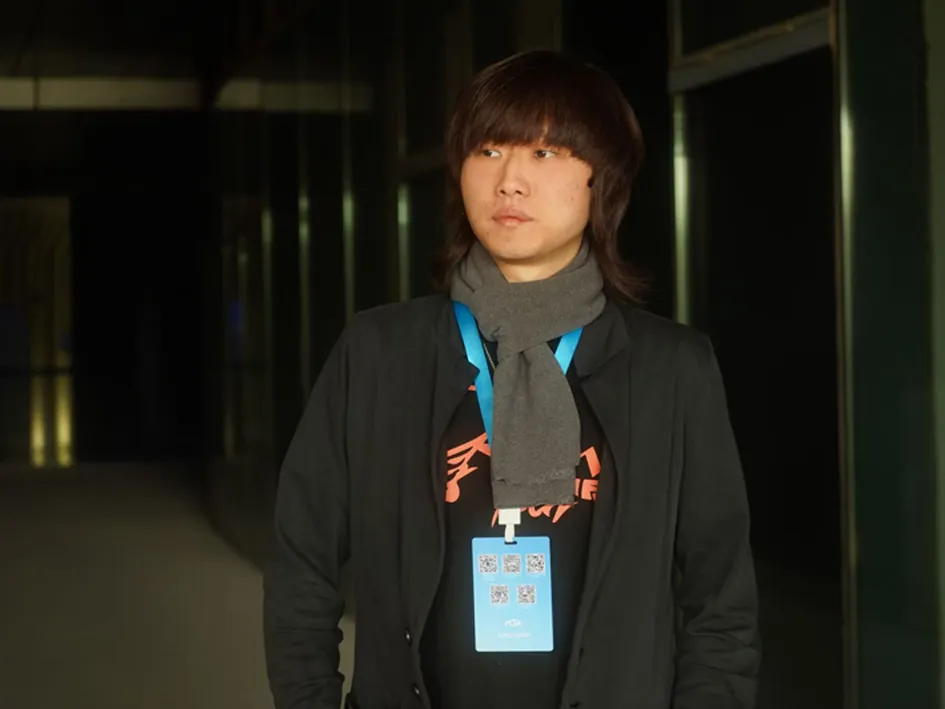
Jin Ziyi
Sun: The popularization of AI technology brings both challenges and opportunities to the cultivation of animation professionals in universities. In teaching practice, we have found that although the new generation of university students has grown up in the digital age, some show apathy or rejection towards AI. This stems from the rigidity of traditional teaching models, a fear of the difficulty of learning technology, and cognitive biases. Talent cultivation in the AI era needs to break through the misconception of “emphasizing technology while neglecting creativity,” adhering to the principle of “teaching according to aptitude,” guided by interest cultivation, and centered on the synergistic development of “three abilities” (creativity, aesthetics, and execution).
The first is a strategic adjustment of the education system, including the following directions:
Curriculum Restructuring: Breaking away from the traditional binary structure of technical training and art theory, a three-dimensional curriculum system integrating AI technology application, humanities literacy, and interdisciplinary integration will be constructed. Relevant AI fundamentals courses may be added as appropriate, while strengthening humanities courses such as “Traditional Chinese Aesthetics,” “Animation Philosophy,” and “Cultural Studies” to promote the deep integration of technology and humanities.
Teaching model transformation: shifting from “knowledge transmission” to “practice and inquiry,” allowing students to learn how to use AI tools in real-world creative projects and cultivate their ability to solve practical problems.
Evaluation system innovation: Abandoning the single evaluation standard of technical proficiency and work completion, a multi-dimensional evaluation system is established that considers creative uniqueness, aesthetic judgment, technical application flexibility, and cultural connotation, with an emphasis on evaluating the creative process and thinking ability.
Resource platform construction: Establish an AI animation training base in cooperation with industry enterprises, and introduce the latest AI creation tools and datasets; build an on-campus AI animation creation laboratory to provide students with hardware support for independent exploration; expand international exchange channels to allow students to access the cutting-edge developments in the global AI animation field.
Secondly, the next generation of animators needs a new knowledge structure, requiring them to possess the following abilities:
AI tool application capabilities: Proficient in the collaborative application of mainstream AI models, animation production software and AI plugins, and capable of guiding AI to generate content that meets requirements through precise instructions, including AI-assisted creation skills in character design, scene construction and storyboard generation.
Algorithmic thinking and data literacy: Understand the basic principles and algorithmic logic of AI generation technology, and be able to select appropriate AI models and parameters according to creative needs; possess data screening and optimization capabilities, be able to identify high-quality training data, and provide precise support for AI creation; understand data ethics and copyright regulations to ensure the compliance of AI creation.
Interdisciplinary knowledge base: integrating knowledge from multiple disciplines such as art studies, computer science, communication studies, and cultural studies.
Cross-disciplinary collaboration skills: Able to collaborate with computer professionals to optimize AI tools, work with cultural studies scholars to explore traditional cultural elements, and discuss cross-cultural communication strategies for works with communication scholars.
Thirdly, the core humanistic qualities of the next generation of animators should include the following abilities:
Independent aesthetic judgment: Possesses the ability to filter and optimize AI-generated content, can identify aesthetic defects in AI content, and enhance the aesthetic value of works by adjusting colors, composition, details, etc.; establishes independent judgment standards based on traditional culture and modern aesthetics, and does not blindly pursue the “standardized beauty” generated by technology.
Profound cultural understanding: Deeply studying the core connotations, aesthetic genes, and spiritual essence of traditional Chinese culture, and being able to organically integrate traditional elements with modern creations to give works cultural depth; possessing a cross-cultural perspective, understanding the aesthetic differences of different cultures, and being able to convey Chinese aesthetics in a global context.
Sustained innovation and creativity: Breaking away from conventional thinking, being able to use AI tools to create new ideas from existing ones, that is, based on AI-generated basic materials, achieving breakthroughs in artistic expression through deconstruction, recombination, and innovation; possessing the ability to integrate personal life experiences and emotional resonance into works, injecting soul into AI-generated content.
A strong sense of professional ethics: establish a correct awareness of copyright, understand the ethical norms of AI creation, respect the intellectual property rights of others, and avoid using unauthorized training data; adhere to the original intention of artistic creation, do not rely on AI to make “soulless copies”, and always take the transmission of humanistic care and values as the core of creation.
Jin: AI animation faces serious copyright and ethical issues, such as unauthorized use of training data and ambiguous copyright ownership of generated content. From the perspectives of industry governance and academic research, what kind of regulations, ethical guidelines, and technical standards should be established to guide its healthy development?
Sun: AI technology poses a challenge to the traditional copyright system, which struggles to address issues such as the recognition of rights and the regulation of use of AI-generated content. Hollywood union protests and copyright disputes highlight the contradiction between traditional copyright awareness and technological advancements. Guiding the healthy development of AI animation creation requires constructing a comprehensive governance system across three dimensions: legal frameworks, ethical guidelines, and technical standards.
First, in terms of legislation, a copyright system adapted to the AI era needs to be established.
First, the ownership of rights to AI-generated content should be clearly defined: a dedicated “AI Copyright Law” should be formulated, recognizing “instruction inputters and creators” as the core rights holders. The creator’s creative ideas, instruction design, and content optimization determine the core characteristics of AI-generated works, and therefore they should enjoy copyright over these works. At the same time, the legitimate rights and interests of AI model developers also need to be protected. This can be achieved by stipulating a reasonable remuneration distribution ratio through usage agreements, thus clarifying the developers’ copyright over the algorithm model.
Second, the rules for using AI training data will be standardized: A distinction will be made between fair use and infringing use—for non-commercial purposes such as academic research and teaching practice, fair use may be considered, but the data source must be acknowledged; for commercial AI training, authorization from the copyright holder must be obtained, and reasonable compensation must be paid. Simultaneously, a registration system for training data will be established, requiring AI companies to disclose the source and authorization status of their training data and accept public oversight.
Third, define the scope of copyright protection for AI-generated content: AI-generated content with “originality” is more likely to receive copyright protection. Here, “originality” emphasizes the creator’s creative input and aesthetic choices, excluding content purely generated automatically by AI without human intervention. At the same time, the copyright protection period for AI-generated content should be limited to avoid over-protection that restricts industry innovation; a shorter protection period than for traditional human-created works is recommended.
Fourth, establish standards for determining infringement disputes: clarify the criteria for determining infringement of AI-generated content, focusing on factors such as “the degree of similarity between the AI-generated content and the original work,” “whether the creator intentionally instructed plagiarism,” and “the proportion and purpose of using the original work.” Establish a specialized AI copyright dispute arbitration institution, drawing on experts from multiple fields such as art, law, and computer science to improve the professionalism and impartiality of dispute determination.
Secondly, in terms of ethical guidelines, it is necessary to clearly define the bottom line for AI animation creation.
First, we must adhere to the “people-centered” creative orientation: AI animation creation should respect human dignity and emotions, and must not generate content that violates public order and good morals, such as violence, discrimination, or false information; it must not use AI technology to infringe on the privacy of others, such as generating unauthorized portrait animations of others.
Second, we advocate the principle of “transparent creation”: When creators use AI for commercial creation, they should clearly disclose to the public the process and extent of AI involvement in the work, and must not conceal the fact that AI was used in the creation, so as to protect consumers’ right to know.
Third, we must establish a responsible approach to technology application: AI companies and creators should assume social responsibility for technology application and avoid the degradation of creative abilities due to over-reliance on AI; they must not use AI technology for malicious competition, such as mass-producing low-quality works to impact the market and damage the industry ecosystem.
Fourth, respect cultural diversity and ethnic characteristics: AI training data should focus on cultural diversity to avoid the homogenization of cultural expression due to data homogenization; encourage AI models to incorporate cultural elements of various ethnic groups to promote cultural inheritance and exchange, rather than to undermine cultural diversity.
Secondly, in terms of technical standards, industry norms for AI animation creation need to be established.
First, establish quality standards for AI-generated content: clarify the minimum requirements for AI animation in terms of technical indicators such as screen resolution, color reproduction, and dynamic smoothness to avoid the proliferation of low-quality content; at the same time, establish review standards for AI-generated content, requiring works to conform to public order and good morals and cultural orientation.
Second, establish quality and security standards for training data: standardize the collection, organization, and labeling processes of AI training data to ensure the legality, accuracy, and integrity of the data; establish a data security guarantee mechanism to prevent the leakage and misuse of training data and protect the legitimate rights and interests of copyright holders.
Third, establish technical specifications for AI tools: require AI companies to disclose the algorithm principles and working mechanisms of their tools to improve the transparency of the technology; formulate compatibility standards for AI tools to promote collaboration between different AI tools and lower the barriers to use for creators; and set up traceable identifiers for AI-generated content to facilitate copyright tracing and infringement determination.
Jin: AI technology has lowered the technical and cost threshold for animation production. Is this a historic opportunity for small and medium-sized animation studios and independent creators who lack funds to “overtake on a curve”? Or will it exacerbate the “Matthew effect” in the industry due to the monopoly of AI tools by giants?
Sun: The popularization of AI technology in the animation field presents both opportunities and challenges for small and medium-sized animation studios and independent creators. Its ultimate direction depends on the construction of the industry ecosystem and the logic of resource allocation.
From an opportunity perspective, AI technology does indeed offer small and medium-sized studios and independent creators the possibility of “leapfrogging” the competition, as it significantly lowers the technical and financial barriers to creation. In traditional animation production, expensive software licenses, professional technical teams, and lengthy production cycles deter small and medium-sized organizations and independent creators. AI tools can efficiently complete character design, scene construction, and storyboard generation at a lower cost, eliminating the need for large investments in technical teams. Independent creators can produce high-quality works solely based on their personal creativity and aesthetic sense, breaking down the limitations of funding and technology on creation. AI also enhances the market competitiveness of small and medium-sized creators. With the help of AI tools, small and medium-sized studios can quickly respond to market demands, shorten project cycles, and compensate for their “scale disadvantage” with “creative uniqueness” in competition with large enterprises. For example, independent creators can use AI to quickly iterate creative solutions, launch short animated videos that cater to the aesthetic preferences of young audiences, achieve rapid dissemination through social media platforms, and gain market recognition. AI also promotes the decentralization of the creative ecosystem. The widespread availability of tools has freed creative power from the concentration of power in the hands of a few large corporations, enabling more creative but resource-poor creators to participate in industry competition and enriching the industry’s creative ecosystem. This decentralized trend is conducive to stimulating innovation in the industry, fostering more diverse and personalized works, and avoiding the homogenization of creation caused by the monopoly of large corporations.
From a challenge perspective, the monopoly of AI tools by tech giants could indeed exacerbate the “Matthew effect” in the industry, with the monopoly of core AI tools potentially creating technological barriers. Large tech companies, leveraging their financial and technological advantages, control more advanced AI models, higher-quality training datasets, and more user-friendly tool interfaces; small and medium-sized creators can only use free versions with limited functionality or paid subscription services, struggling to obtain the same technical support as the giants, creating a “technology gap.” Inequality in data resources could exacerbate competitive imbalances. Large companies can invest heavily in building their own high-quality training datasets, especially those containing premium copyrighted content; small and medium-sized creators can only rely on publicly available datasets, making it difficult for their works to compete with large companies in terms of quality and stylistic diversity, further widening the industry gap. The concentration of market resources could squeeze the survival space of small and medium-sized creators. Large companies, with their brand influence and channel advantages, can quickly seize the commercial market for AI animation; the works of small and medium-sized creators struggle to obtain equal exposure and commercial cooperation resources, and even uniquely creative works may be ignored by the market due to a lack of dissemination channels.
To maximize benefits and minimize harms, the key lies in building a fair and open industry ecosystem. On the one hand, governments and industry associations should strengthen supervision to prevent the monopoly of AI tools and data resources and promote the open-source sharing of core technologies. On the other hand, dedicated support mechanisms should be established to provide small and medium-sized studios and independent creators with subsidies for AI tools, technical training, and promotion of their work, ensuring their right to participate in market competition on an equal footing. Only in this way can AI technology truly become a tool to activate the industry’s innovation vitality, rather than a driver that exacerbates industry polarization.
Jin: Beyond creative practice, can AI revolutionize animation theory research? For example, by analyzing the evolution of animation visual styles over the past century through big data, or by automatically generating structured analysis reports for films. What are your views on the prospects of AI as a research tool?
Sun: AI technology can not only empower animation creation practice, but also bring revolutionary changes to animation theory research. As a research tool, it has broad prospects and will promote animation theory research from “experience-based” to “data-driven”, expanding the depth and breadth of research.
AI enables “quantitative analysis” in animation research, breaking through the limitations of traditional research. Traditional animation theory research often relies on researchers’ subjective experience and qualitative analysis, such as judging the evolution of animation styles and interpreting the narrative logic of films, often lacking objective data support. AI’s image recognition technology can accurately extract and quantify the visual elements (color, composition, shape, and camera language) of massive amounts of animation works, while natural language processing technology can analyze keywords and emotional tendencies in script texts and film reviews. For example, by analyzing the evolution of visual styles in animation over the past century, AI can accurately statistically analyze changes in color saturation, compositional preferences, and character design characteristics in animations from different periods, providing objective data support for the study of “animation style history.” By automatically generating structured analysis reports for films, AI can quickly sort out the narrative rhythm, character relationships, and thematic keywords, improving research efficiency. It can also expand the “research boundaries” of animation itself, enabling cross-disciplinary and large-scale research. Traditional animation research is limited by manpower and time, making it difficult to conduct large-scale cross-cultural and cross-era research. AI can rapidly process massive amounts of data. For example, it can simultaneously analyze thousands of animated works from different countries and eras to explore the differences and commonalities in animation aesthetics across cultural contexts; or it can integrate global animation industry data and audience feedback data to analyze the impact of technological innovation and market demand on animation creation. This large-scale interdisciplinary research allows researchers to grasp the development patterns of the animation industry from a more macro perspective and propose more universal theoretical viewpoints.
AI can also assist in the “theoretical construction” of animation research, giving rise to new research topics. In analyzing massive amounts of data, AI can discover potential connections and patterns overlooked in traditional research, such as the correlation between certain visual elements and audience emotional responses, or the adaptability of certain narrative patterns in different cultures. These discoveries can provide researchers with new perspectives and give rise to new theoretical propositions. For example, analyzing the aesthetic differences between AI-generated animation and human-created animation can deepen the discussion of the “essence of animation art”; analyzing the inheritance and variation of traditional animation elements in modern AI animation can provide a new theoretical dimension for the study of “nationalization of animation.”
AI as a research tool also has limitations: First, AI analysis results depend on the quality of training data and the rationality of the algorithm. If the data is biased or the algorithm lacks humanistic consideration, it may lead to one-sided research conclusions. Second, animation theory research requires not only quantitative analysis but also in-depth interpretation of the work’s ideological connotations, cultural values, and emotional expressions. This requires researchers’ humanistic qualities and theoretical accumulation; AI cannot replace human subjective thinking and value judgments. Therefore, the core value of AI as a research tool for animation theory is to “assist researchers in improving research efficiency and broadening their research horizons,” rather than replacing the researcher’s primary role. Future animation theory research should construct a research model that combines AI assistance with humanistic interpretation—using AI to achieve quantitative analysis and large-scale processing of data, and using researchers’ humanistic qualities for theoretical interpretation and value judgment. The two should work together to promote the scientific and systematic development of animation theory research.
Jin: Walter Benjamin once proposed the disappearance of the “halo” in art during the age of mechanical reproduction. In the era of AI-generated content, will the emotions and “halo” derived from unique human life experiences and spontaneous expression further dissipate? How can we safeguard and reconstruct this warmth in our works?
Sun: The core characteristic of AI-generated imagery’s new aesthetics lies in the fusion of “algorithmic aesthetics” and “humanistic aesthetics,” a feature that provides a crucial perspective for understanding the continuation of the “halo” in art in the AI era. Walter Benjamin’s concept of the “halo” centers on the emotional warmth and spiritual value of a work of art, born from unique human life experiences, the uniqueness of handcrafted creation, and improvisation. Because AI lacks human life experiences and emotional resonance, its generated content often exhibits “standardized” and “undifferentiated” characteristics, posing a real risk of further erosion of the “halo”—the imperfections of handcrafted creation, the flashes of inspiration in improvisation, and the emotional depth imbued by life experiences are all difficult for AI to replicate.
However, the AI era does not necessarily lead to the disappearance of the “halo.” The key lies in how human creators can safeguard and reconstruct the emotional warmth of art through human-machine collaboration: infusing the soul of the work with “humanistic aesthetics” to protect the core of the “halo.” AI-generated “algorithmic aesthetics” can only provide standardized visual forms; the core of the “halo” lies in the humanistic connotations and emotional expressions within the work. Creators imbue AI-generated content with soul by integrating their own life experiences, cultural understanding, and emotional resonance into their creations. For example, in AI-generated cityscapes at night, one can incorporate their understanding of “nostalgia,” conveying feelings of loneliness and longing by adjusting the color tone and lighting; in AI-generated traditional elements, one can inject reverence and love for traditional culture, giving the work a spiritual core.
A key characteristic of the “halo” is the uniqueness and improvisation of handcrafted creation, while the “perfection” and “repetitiveness” of AI-generated content precisely undermine this characteristic. Therefore, when using AI tools, creators can consciously retain traces of human intervention, breaking the standardized logic of AI. These human traces in human-machine collaboration can inject uniqueness and improvisation into the work, reconstructing the “halo” of art. “Personalized creativity” can overcome the standardized limitations of AI and strengthen the uniqueness of the work. The generation of the “halo” is closely related to the uniqueness of the work; the core of AI-generated content is the replication of data patterns, easily leading to homogenization. Creators can break through the standardized limitations of AI through unique creative ideas and personalized aesthetic expression, or by deconstructing and recombining the basic materials generated by AI, creating unique expressions that AI cannot generate independently. This personalized creativity can give the work an unreplicable uniqueness, becoming an important carrier of the “halo.”
In short, the continuation of the “halo” of art in the AI era does not mean rejecting AI technology, but rather upholding the dominant role of humanity in human-machine collaboration. It means safeguarding and reconstructing the emotional warmth of art by focusing on humanistic content, human intervention, and personalized creativity. The “halo” of art essentially originates from human spiritual activities and emotional expression. As long as human creators adhere to their original artistic aspirations, they can safeguard the core values of art amidst the technological wave.
Jin: Finally, from the perspective of a leader at the China Animation Research Institute and the AI Future Film Research Institute, could you talk about the future layout and planning of the cutting-edge field of “AI + Animation”? In your opinion, what new landscape will AI lead Chinese animation to in the next five to ten years? What core principles should we uphold to navigate this wave?
Sun: The rise of AI technology has brought about a comprehensive transformation to the animation field. Technology is always an enabling tool; the core competitiveness lies in the synergistic cultivation of creativity, aesthetic sense, and execution. Personalized education, interest-driven learning, and space-based empowerment are key paths for talent development. The essence of artistic creation—the pursuit of humanistic care, the adherence to creative expression, and the exploration of aesthetic value—has never changed. Animation creation in the AI era is a collaborative effort between humans and AI, requiring full utilization of AI’s technological advantages and human creativity and aesthetic strengths.
Regarding future plans and strategies in the cutting-edge field of “AI + Animation,” we will undertake the following activities:
First, we will build a research platform for AI animation with Chinese aesthetics. This platform will collaborate with universities, industry enterprises, and research institutions to integrate traditional art resources, construct a high-quality training dataset for Chinese aesthetics, and develop AI animation models with Chinese characteristics, overcoming the bottleneck of the current lack of Chinese aesthetics in AI models. The platform will focus on AI transformation technologies for traditional art elements such as ink painting, paper cutting, and shadow puppetry, promoting the deep integration of traditional aesthetics and modern AI technology, and providing technical support for the nationalized expression of Chinese animation.
Second, we will promote the reform of the AI animation talent training system. Relying on the research institute’s academic resources and collaborating with animation departments in universities, we will construct a talent training model that integrates AI technology, humanistic qualities, and interdisciplinary skills. We will offer specialized AI animation courses, hold AI animation creation workshops, and establish AI animation training bases to cultivate well-rounded talents with technical application abilities, humanistic qualities, and innovative thinking. Simultaneously, we will conduct AI animation education research to provide teaching solutions and resource support for higher education in animation nationwide.
Third, we will establish an AI animation industry collaborative innovation center. This will create a collaborative innovation platform among universities, enterprises, and creators to promote the transformation and industrial application of AI animation technology. We will support small and medium-sized studios and independent creators in using AI tools for creation, and promote the cross-industry application of AI animation in short videos, film and television, games, cultural tourism, and other fields. We will also hold AI animation creation competitions and academic forums to gather industry resources and form a virtuous cycle of “research—creation—industry.”
Fourth, establish an AI Animation Copyright and Ethics Research Center. This center will bring together experts from law, ethics, computer science, and other fields to conduct research on AI animation copyright systems and ethical guidelines, providing theoretical support for industry governance. It will also promote the development of industry norms and technical standards for AI animation, establish a copyright dispute mediation mechanism, and guide the healthy development of the industry.
As for the new landscape of China’s animation industry in the next five to ten years, I believe the following changes will occur:
First, it will diversify and improve the efficiency of the creative ecosystem. AI technology will free animation creation from the constraints of funding and technology, enabling more personalized and niche creative ideas to be realized, forming an ecosystem where mass-market and high-quality creations coexist. Large enterprises will focus on industrialized, globalized, high-quality animation projects, while small and medium-sized studios and independent creators will focus on personalized, vertical animation content, leading to greater diversification in the industry. At the same time, AI will significantly shorten the creation cycle, improve industry efficiency, and promote the large-scale development of the animation industry.
Secondly, the intelligentization and cross-modalization of expression will emerge. AI-driven interactive storytelling and cross-modal fusion technologies will become the mainstream forms of expression in animation. Examples include interactive animations that can dynamically adjust the plot based on audience feedback, and multi-sensory animated works that integrate text, images, sound, and VR/AR technologies. The application scenarios of animation will expand from traditional film and television and games to fields such as cultural tourism, education, and healthcare, becoming a more inclusive carrier of cultural expression.
Thirdly, there is the systematization and internationalization of nationalistic expression. Supported by a Chinese aesthetic AI model, the nationalistic expression of Chinese animation will shift from simple formal imitation to the inheritance and innovation of its inner meaning, forming an animation aesthetic system with distinctive Chinese cultural characteristics. Simultaneously, AI technology will promote the cross-cultural dissemination of Chinese animation, adapting to the aesthetic preferences of different cultures, allowing Chinese-style animated works to better reach the world and enhancing the international influence of Chinese animation.
Fourth, the industry will become more ecological and collaborative. AI will break down barriers between the animation industry and other industries, forming a cross-sectoral collaborative pattern of “animation, technology, culture, and cultural tourism.” For example, animation IPs can be combined with AI technology to develop virtual idols and interactive cultural tourism projects; animation education can be combined with AI technology to develop personalized teaching content. The industry will shift from single content production to ecological development across the entire industry chain, creating new growth points.
In the future, we need to adhere to the following core principles for navigating the wave of AI technology:
First, we adhere to the creative principle of “human-centeredness.” We always uphold the creative logic of “human-led, AI-assisted,” ensuring that AI does not replace humans as the main creators. The core of animation creation lies in humanistic care, creative expression, and aesthetic value; AI is merely a tool to realize these core values, and we must not put the cart before the horse.
Second, the principle of “culture as the soul” for inheritance. With the inheritance and promotion of traditional Chinese culture as the core, we aim to promote the systematic and international expression of Chinese aesthetics. We utilize AI technology to uncover the aesthetic genes of traditional culture, allowing traditional aesthetics to be innovatively inherited in modern animation, avoiding the erosion and homogenization of cultural connotations.
Thirdly, the development principle of “innovation as the key” is upheld. We encourage the coordinated development of technological and artistic innovation, promoting both the research and application of AI animation technology and encouraging creators to achieve creative breakthroughs with AI assistance. We create an innovative environment that embraces failure, allowing the industry to continuously push boundaries and achieve high-quality development through innovation.
Fourthly, the principle of “standardized and orderly” governance. A sound copyright system, ethical guidelines, and technical standards must be established to ensure the healthy and orderly development of the industry. A balance must be struck between technological innovation and rights protection; it is necessary to both stimulate the enthusiasm of creators and protect the legitimate rights and interests of copyright holders, avoiding industry chaos caused by the abuse of technology. Universities should build a talent training system adapted to the AI era; the industry needs to standardize copyright order and promote the dissemination of Chinese aesthetics; and creators should use AI as a tool for realizing their creative ideas while adhering to their artistic aspirations. Only in this way can the animation industry achieve high-quality development in the AI era, better showcase the unique charm and cultural confidence of Chinese animation, and contribute Chinese wisdom and solutions to the world of animation art.
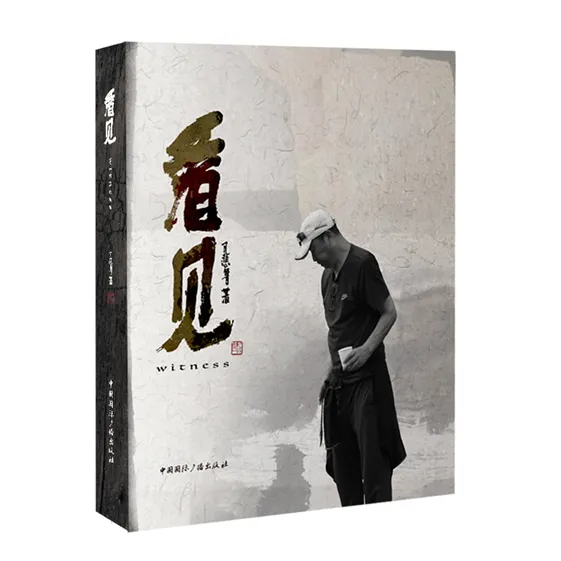 The launch ceremony for Professor Sun Lijun's "Seeing" album was successfully held.