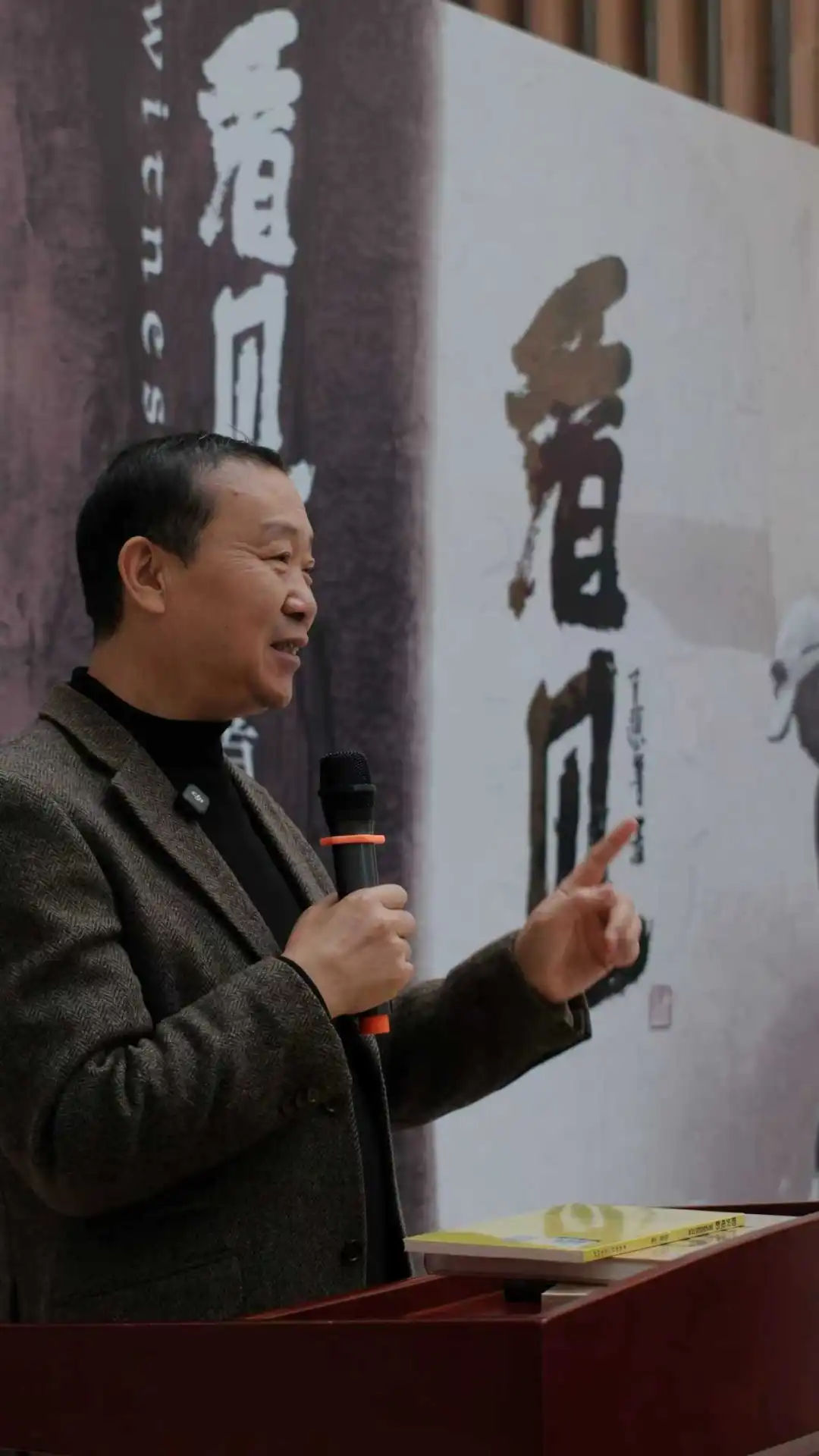
On June 13, 2026, the Beijing Municipal Art Museum in the Sub-center of Beijing hosted a highly anticipated academic event – “Beyond the Frame, Embracing All Things: Van Beru Art Exhibition”.
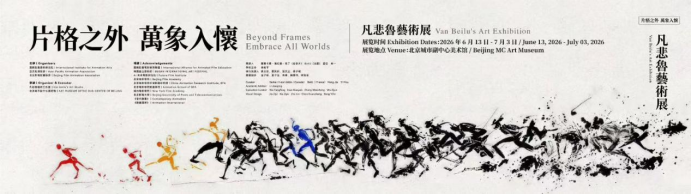
This exhibition, jointly organized by the International Academy of Animation Art, the Asia-Pacific Animation Association, and the Beijing Film and Television Animation Association, is not only a retrospective of the artistic career of Sun Lijun (Fan Beilu), a second-level professor and doctoral supervisor at the Beijing Film Academy, but also an in-depth academic review of how the Chinese animation school can uphold tradition while innovating and integrating across disciplines in the digital age. As a key project of Beijing Municipality to promote the deep integration of “culture + technology,” the exhibition, with its profound documentary value and forward-looking creative concept, provides the industry with an excellent sample for observing the development of Chinese animation and contemporary art.
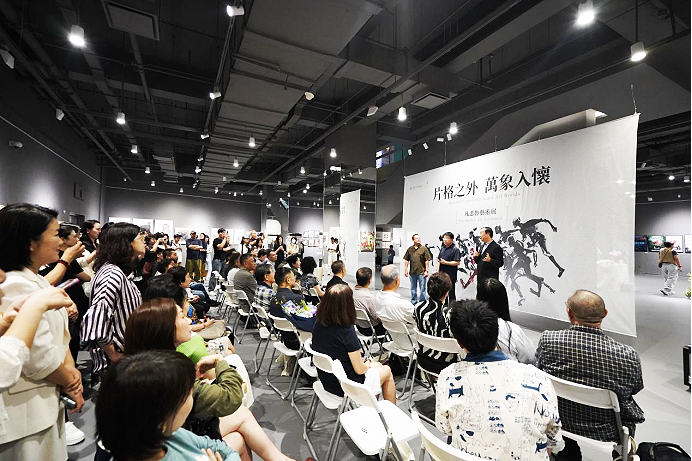
Opening Ceremony of “Beyond the Frame, Embracing All Things – Van Beru Art Exhibition”
Literature as the Core: A Gene Map of Chinese Animation on Film
This exhibition places “archival awareness” at its core. Upon entering the exhibition area, visitors are immediately greeted by the early manuscripts of the 8K ink-wash animations Li Qiu and Qiu Shi. These precious paper documents not only record the evolution of characters from lines to the screen but also preserve the creators’ original thought processes in creating atmosphere and refining narratives. As representative works of Chinese ink-wash animation in the new era, these two works successfully integrate the charm of traditional Chinese ink painting with ultra-high-definition imaging technology and intelligent creative methods. Qiu Shi was shortlisted for and won an award at the 70th Berlin International Film Festival, while Li Qiu won the Best Film Award at the Asian Micro Film Festival. Both were nominated for Best Animated Feature at the China Golden Rooster Awards. This is not only a harvest of awards but also powerful proof that the Chinese animation school maintains its aesthetic roots amidst technological iteration.
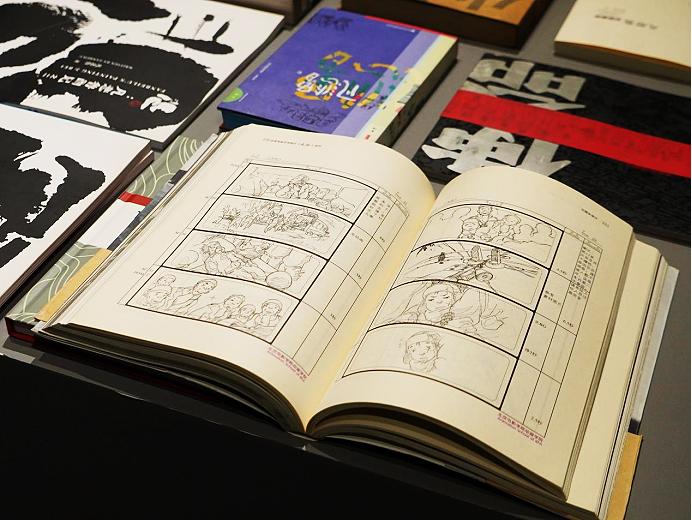
Manuscript of the animated film “Little Soldier Zhang Ga”
Among the exhibits, the original film reels of “Little Soldier Zhang Ga” are particularly eye-catching. As a milestone work of original animated feature films from Beijing, these reels, weathered by time, have become “living fossils” witnessing the development of the Chinese animation industry from its inception to its current stage. Together with design drawings and promotional materials from classic works such as “The Ultimate Adventure” and “New Crossroads,” they form a rigorous academic sequence, systematically tracing Professor Sun Lijun’s decades-long exploration of the evolution of animation language and style. This appreciation for tangible cultural heritage reflects the exhibition’s deeper intention to construct a “historical study of Chinese animation.”
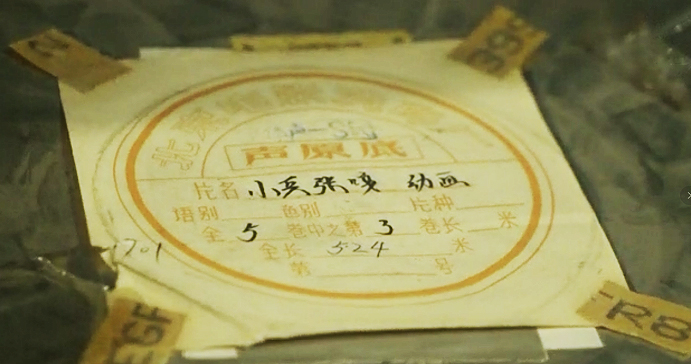
Original film print of the animated film “Little Soldier Zhang Ga”
Cross-disciplinary experiment: A dual variation of AI ink painting and walking aesthetics
If the document section pays homage to the past, then the core exhibition area’s cross-disciplinary creation of contemporary ink painting and digital art points to future possibilities. Professor Sun Lijun’s “Human Face” series cleverly avoids the alienation of art by technology, organically stitching together AI-generated graphics with traditional handmade ink painting techniques. This “AI ink painting fusion” is not a simple superposition of tools, but a completely new aesthetic grammar—the rational composition of the machine and the emotional penetration of ink and brush interact and play out, presenting a serene and profound philosophical meaning. This series was previously exhibited at the National Agricultural Exhibition Center and sparked heated discussions in academic circles. Its systematic presentation at the Sub-Center Art Museum further solidifies its position in the contemporary art landscape.
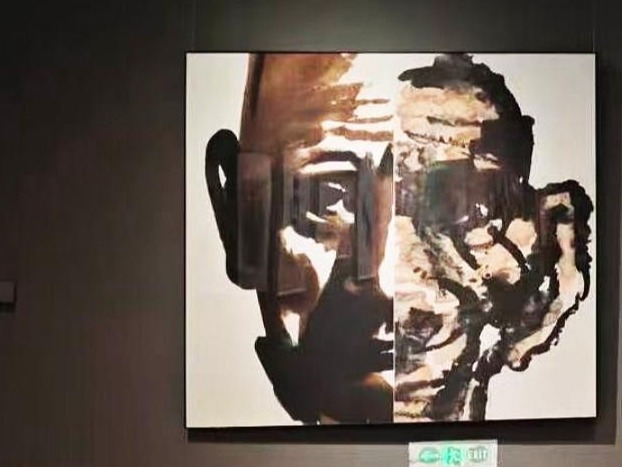
The Face series
Meanwhile, the newly launched “Years” series is actively preparing for its exhibition in the parallel section of the Venice Biennale. This series uses freehand brushwork to interpret the relationship between life and time, demonstrating the artist’s efforts to connect with the international contemporary art context through Eastern philosophy. The “Lucky Leopard” series and the “Tea Ink” series showcase a dual breakthrough in materials and concepts. The “Tea Ink” works, in particular, utilize natural tea to blend ink, taking advantage of the oxidation and diffusion properties of the material to break the inherent conventions of Xuan paper and ink painting, achieving a reinvention of traditional calligraphy and painting media.
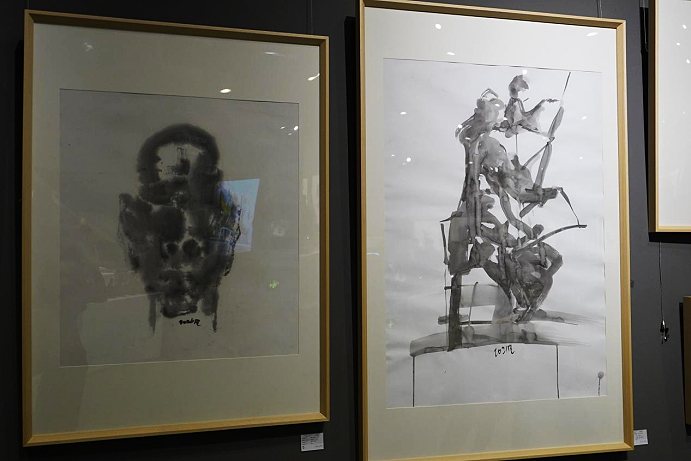
The “Years” series
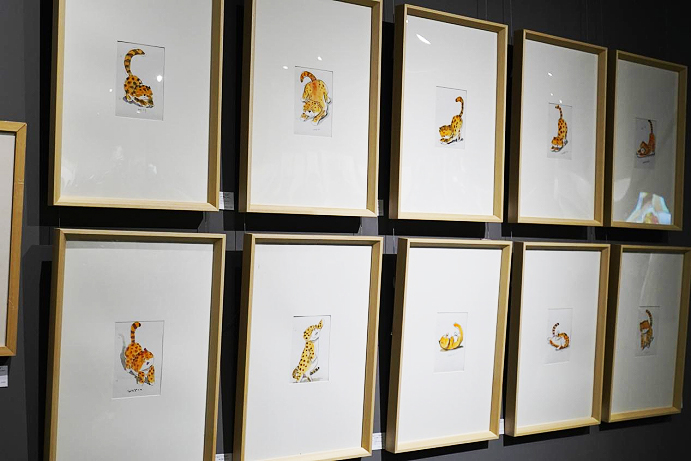
The Lucky Leopard series
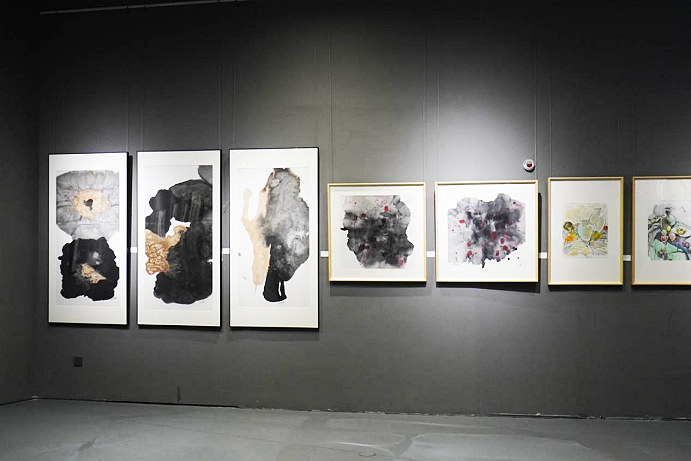
Tea and Ink Series
Sun Lijun’s ink paintings, such as “The Heart of the Jianghu,” skillfully integrate animation modeling logic, the language of light and shadow, and the narrative thinking of time and space, injecting the creative concept of dynamic art into the traditional ink painting system, gradually building a highly recognizable artistic style. Sun Lijun’s cross-disciplinary artistic creations have repeatedly won international honors, fully demonstrating the aesthetic style and creative strength of contemporary Chinese art on the international stage.
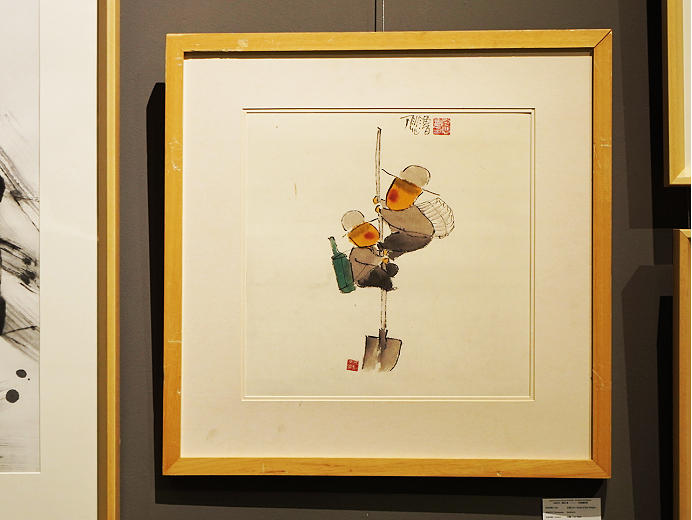
“The Heart of the Jianghu” series of ink paintings
What’s even more unique is the display of his “walking improvisational creation” concept. Unlike the closed-door approach of traditional art studios, Sun Lijun advocates stepping outside the walls and capturing fleeting inspiration in nature and life. This creative method not only preserves the original state of art but also breaks the spatial and temporal constraints of static painting. In the teaching practice exhibition area, the sketches, gouache, and oil paintings of Beijing Film Academy students echo the improvisational works of their instructors, intuitively interpreting the educational philosophy of “knowing and doing in tandem” and providing a highly valuable practical model for current film and television art education reform.
Continuing the Cultural Heritage: From a Century-Old Collection of Images to the Construction of an Academic Hub
Another underlying theme of the exhibition is the preservation and inheritance of the century-long cultural heritage of Chinese animation. Footage from the documentary film “100 Years of Chinese Animation,” directed by Sun Lijun, has been officially included in the national film archive system. This documentary and the exhibition form a deep intertextual relationship: one uses dynamic images to rescue history, while the other uses static documents to trace its development. Together, they construct a three-dimensional archive of memories of Chinese animation.
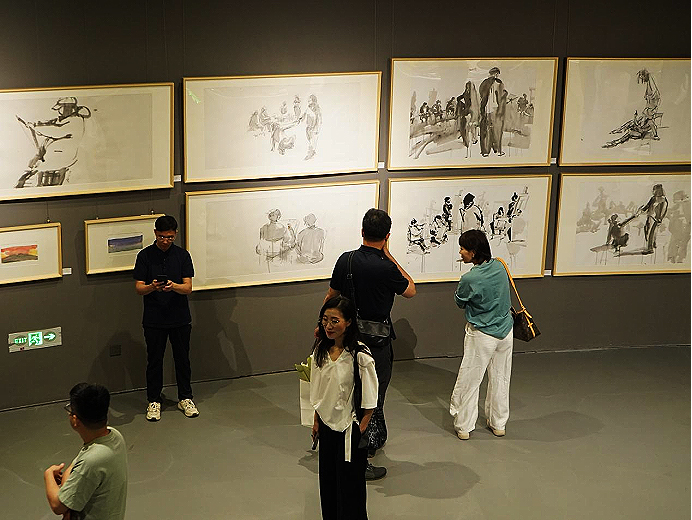
Visitors admire the ink sketch series of paintings.
In the section showcasing honors and academic monographs, the concentrated display and signing of monographs such as Ink Traces, Ink Images, Ink Journey, and Van Beru’s Painting Collection not only summarizes individual academic achievements but also provides theoretical support for the interdisciplinary research field of animation and ink painting. These works fill relevant academic gaps and serve as a bridge connecting professional research with public aesthetic education. As a State Council Special Allowance Expert and a member of the “Four Batches” of talents selected by the Publicity Department of the CPC Central Committee, Sun Lijun fully demonstrates his academic approach of “modernizing and translating classic IPs” through this exhibition—from the film restoration of Little Soldier Zhang Ga to the development of derivative cultural and creative products, classic screen images have been given new vitality in the new era, realizing the social function of “educating people through aesthetics and culture.”
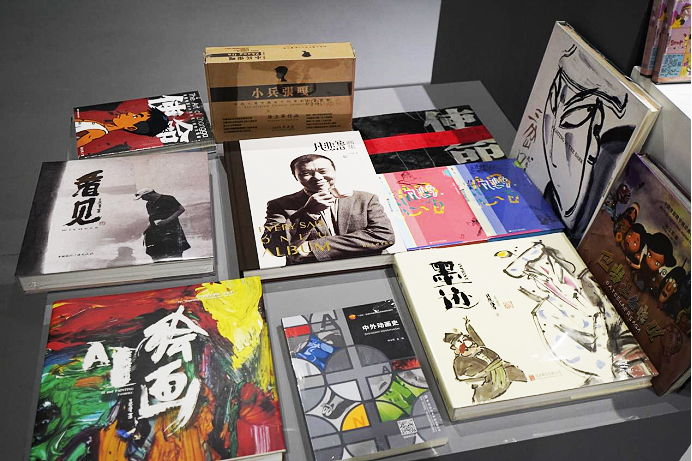
Several art monographs including “Ink Traces”, “Ink Images”, “Ink Path”, and “Van Beru’s Paintings”.
This Van Beren Art Exhibition transcends the scope of a typical solo exhibition; it is a comprehensive academic event integrating archival preservation, academic research, popularization of art education, and international dissemination. Against the macro-context of building a culturally strong nation, the exhibition, through the micro-perspective of “frames” (animation frames), encompasses the myriad aspects of contemporary Chinese animation and fine arts development.
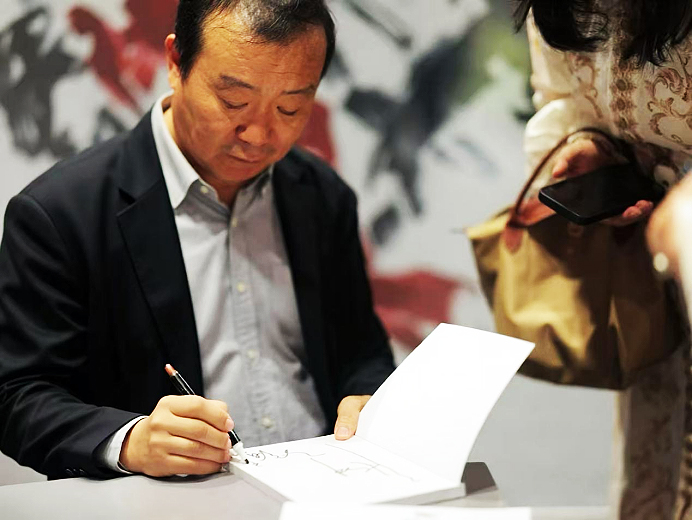
Sun Lijun (Fan Beilu) personally signed autographs for enthusiastic viewers.
Industry experts have pointed out that the success of the “Beyond the Frame, Embracing All Things – Van Beru Art Exhibition” lies not only in its display of superb artistic skills, but also in its establishment of an attitude of maintaining cultural confidence amidst the tide of technology. By upholding the Eastern essence of freehand ink painting and boldly embracing digital crossover, Sun Lijun and his team are attempting to build a professional platform for equal dialogue between Chinese and foreign art.
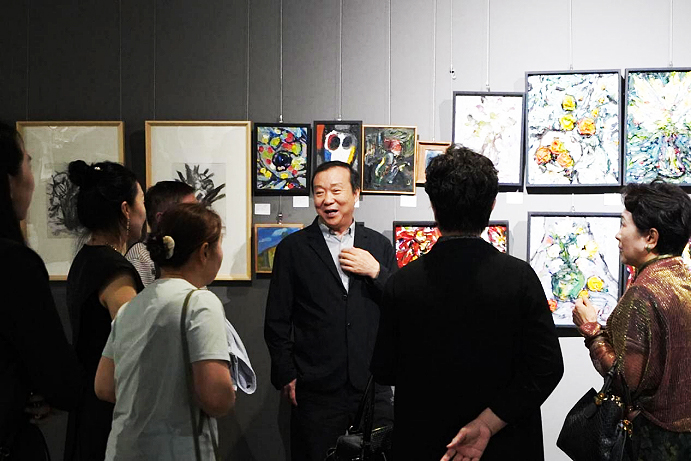
Sun Lijun (Fan Beilu) explains the creation process of oil paintings to the audience in front of his oil painting series.
This exhibition, which runs until July 3, will, like the film reels and ink marks on display, become another rich and vibrant backdrop in the history of Chinese animation, propelling domestic animation and cross-media art forward steadily on the world stage, and showcasing the humanistic warmth and aesthetic brilliance that belong to China.
Edited by Qin Tian, reviewed by Zhuo Jing, and second reviewed by Xu Jiayi.
(By Yan Qingxiong, Shenzhen Special Zone Daily & Read Shenzhen Special Zone Reporter)
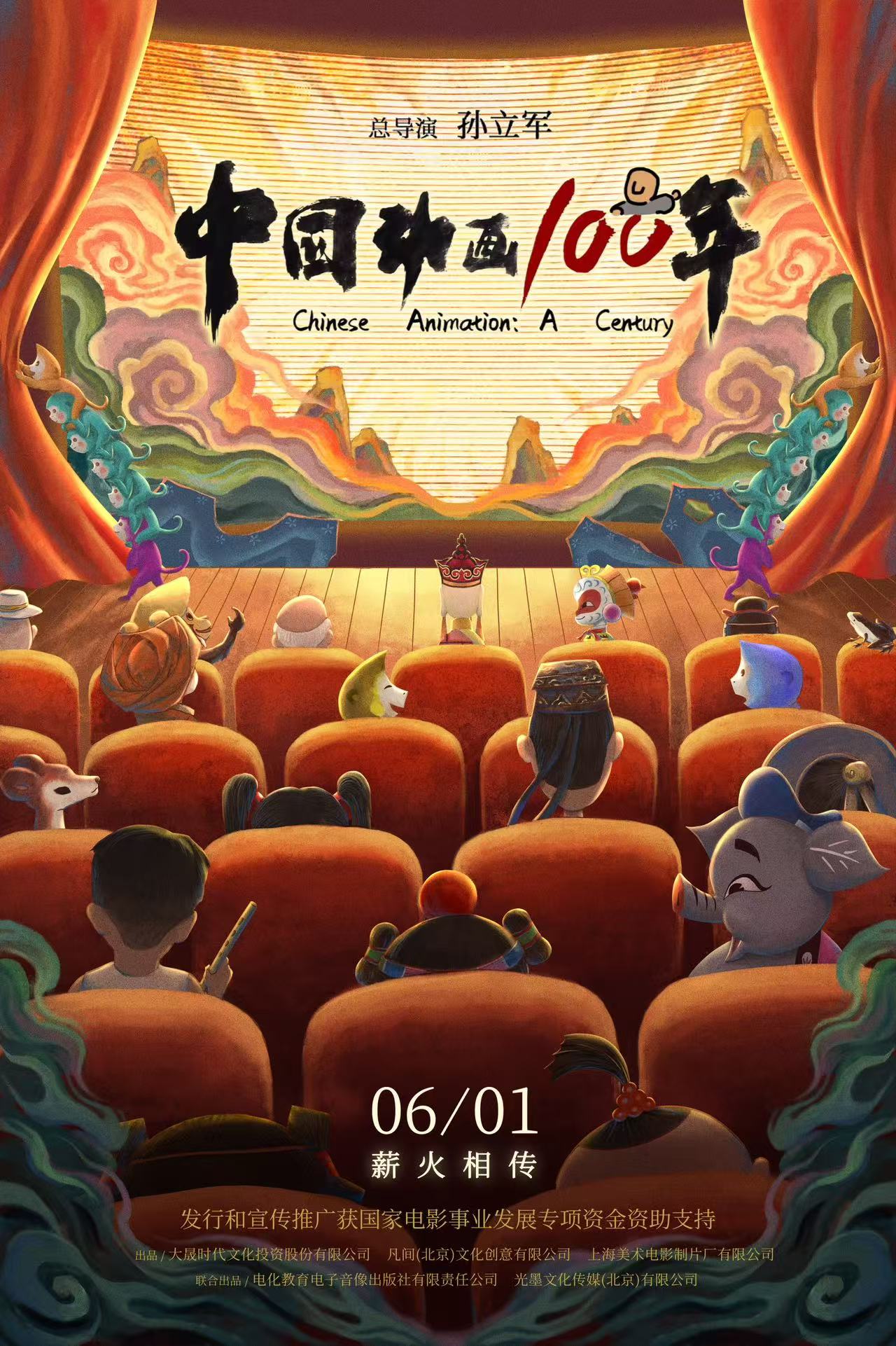 "100 Years of Chinese Animation": Building a Visual Archive of the Spirit of Chinese Animators Over the Past Century